

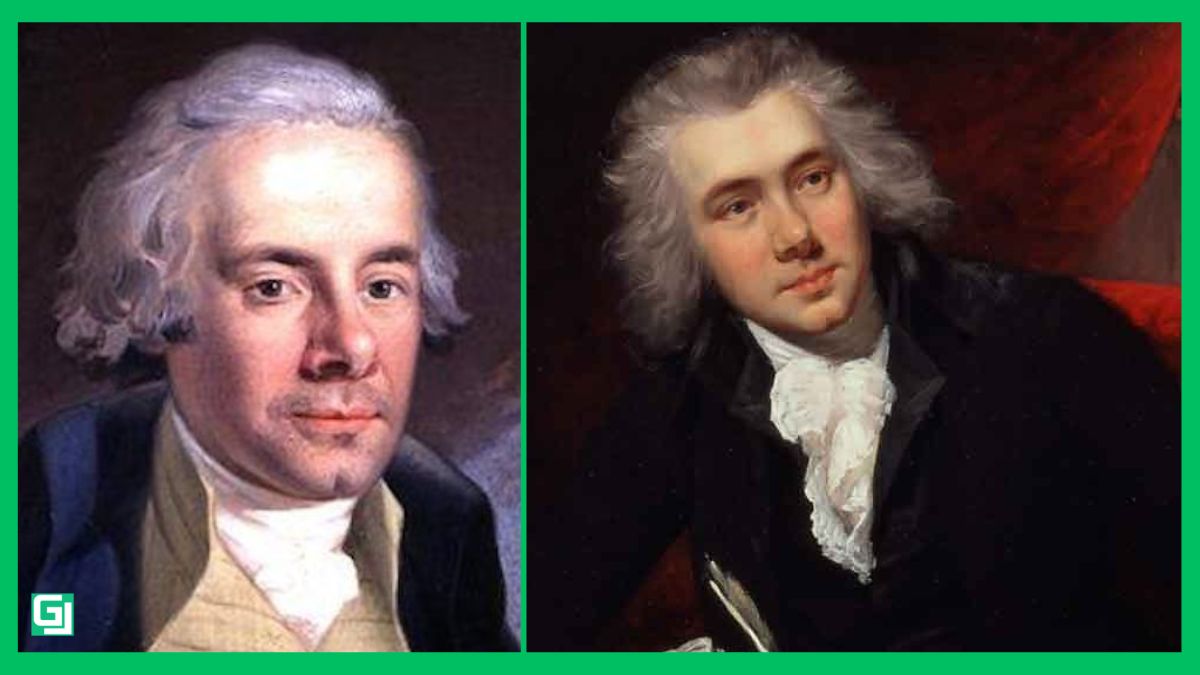
William Wilberforce was a man of extraordinary conviction, courage, and compassion. Known primarily as the politician who spearheaded Britain’s abolition of the transatlantic slave trade, his story is one of tireless advocacy and moral leadership. More than a figure in history, Wilberforce remains a symbol of how one person’s unwavering commitment to justice can reshape a nation’s conscience and history.
Through his work, William Wilberforce not only ended one of the darkest chapters in British history but also laid the foundation for modern human rights activism. His name is often mentioned in the same breath as justice, reform, and spiritual purpose.
Early Life and Education
Born on August 24, 1759, in Hull, England, William Wilberforce came from a prosperous merchant family. Though slight in stature and frequently unwell, young William had a sharp mind and a natural charm that would later serve him in the political arena.
He attended St John’s College, Cambridge, where he formed a lifelong friendship with future Prime Minister William Pitt the Younger. Wilberforce initially lived a life of comfort and privilege, but this phase was only a precursor to his deep transformation.
Spiritual Awakening and Purpose
Wilberforce’s life took a dramatic turn in 1785 when he experienced a profound Christian conversion. This spiritual awakening reshaped his worldview and gave him a new sense of purpose.
Under the guidance of John Newton, a former slave trader turned Anglican clergyman and author of the hymn Amazing Grace, William Wilberforce began to see slavery for the moral evil that it was. He saw his position in Parliament not as a platform for personal gain, but as a divine calling to do good.
His faith was not passive; it compelled action. Wilberforce became convinced that the abolition of the slave trade was his God-given mission, stating:
“God Almighty has set before me two great objects: the suppression of the slave trade and the reformation of manners.”
The Parliamentary Crusader
In 1780, Wilberforce entered the British Parliament as the Member of Parliament for Kingston upon Hull, and later for Yorkshire. It was a time when the slave trade was deeply woven into the economic fabric of Britain, supported by wealthy merchants and powerful institutions.
Undeterred, William Wilberforce began presenting anti-slavery motions in Parliament as early as 1789. These early efforts were met with fierce resistance and multiple defeats. But failure did not deter him.
For over 20 years, Wilberforce became the face of abolition in Britain. He introduced bills, debated tirelessly, and built alliances with other abolitionists, including Thomas Clarkson, Granville Sharp, and Olaudah Equiano.
The Abolition of the Slave Trade
In 1807, after years of persistent advocacy, setbacks, and political maneuvering, the British Parliament finally passed the Abolition of the Slave Trade Act. It marked a monumental victory not just for Wilberforce, but for humanity.
William Wilberforce was 47 years old at the time, and though the slave trade was banned, slavery itself was still legal. He continued his campaign, and by 1833, just three days before his death, Wilberforce received news that the Slavery Abolition Act would soon become law. It would free over 800,000 enslaved Africans in the British colonies.
This final victory fulfilled the mission that had consumed most of his adult life.
Later Life, Death, and Legacy
After retiring from public life due to ill health, William Wilberforce remained active in philanthropic and religious causes. He advocated for education, prison reform, and animal welfare.
He passed away on July 29, 1833, and was buried in Westminster Abbey, close to his friend William Pitt. His funeral was attended by both nobility and commoners—a testimony to the deep respect he commanded across British society.
Today, William Wilberforce’s biography is studied in schools and admired by activists around the world. His life stands as a testament to what principled leadership and unshakeable faith can accomplish.
William Wilberforce Quotes
Wilberforce’s words continue to inspire generations. Here are some of his most powerful and enduring quotes:
- “You may choose to look the other way but you can never say again that you did not know.”
- “We are too young to realize that certain things are impossible… So we will do them anyway.”
- “Surely the principles of Christianity lead to action as well as meditation.”
These William Wilberforce quotes reflect his deep spiritual convictions and relentless pursuit of justice. His speeches in Parliament, writings, and personal letters are filled with moral clarity and emotional intensity.
Books on William Wilberforce
Numerous authors have explored the life and impact of William Wilberforce through compelling biographies and historical analyses. Some of the most notable William Wilberforce books include:
- “Amazing Grace: William Wilberforce and the Heroic Campaign to End Slavery” by Eric Metaxas
A well-researched and accessible biography that brings Wilberforce’s struggle to life. - “William Wilberforce: A Biography” by Stephen Tomkins
This offers a detailed and nuanced view of Wilberforce’s spiritual journey and political battles. - “Real Christianity” by William Wilberforce
Written by Wilberforce himself, this powerful book urges nominal Christians to live out their faith fully.
These books offer deep insights into his legacy and the moral framework that guided his decisions.
Conclusion
The name William Wilberforce echoes through history as a champion of justice, a man of deep faith, and a relentless advocate for the voiceless. His legacy teaches us that moral conviction, when paired with action, can overturn even the most entrenched injustices.
He wasn’t a perfect man, but he was profoundly committed to a perfect cause. As modern societies continue to grapple with inequality and injustice, the story of William Wilberforce reminds us that lasting change often starts with one determined individual.
FAQs
1. Who was William Wilberforce?
William Wilberforce was a British politician, philanthropist, and leader of the movement to abolish the slave trade in the British Empire.
2. What is William Wilberforce best known for?
He is best known for his decades-long campaign that led to the abolition of the transatlantic slave trade in 1807 and slavery itself in 1833.
3. What were William Wilberforce’s beliefs?
Wilberforce was a devout Christian whose faith deeply influenced his political and personal life. He believed in moral reform, human dignity, and justice.4. Are there any famous William Wilberforce quotes?
Yes, one of his most famous quotes is: “You may choose to look the other way but you can never say again that you did not know.”
5. What book did William Wilberforce write?
He authored Real Christianity, a compelling appeal for true spiritual and moral reform within the Church and society.
